ICH M4Q(R2): The Biggest Rewrite of the CTD Quality Module in Two Decades — Is Your Dossier Strategy Ready?
If you author, review, or maintain CTD Module 3 dossiers, ICH M4Q(R2) is about to change how you work — and the transition window is shorter than most teams realise. M4Q(R2) is the first substantial revision of the CTD Quality module since the original M4Q(R1) landed in 2002. Adoption is targeted for June 2027, but the direction of travel is already clear, and the CMC and regulatory affairs functions that start preparing now will be the ones setting the pace for their organisations rather than scrambling to catch up.
Why a 20-year-old framework finally had to change
M4Q(R1) was written for a very different pipeline than the one we work with today. Biologics and biosimilars, ATMPs and cell and gene therapies, continuous manufacturing, platform technologies, AI/ML-enabled analytics, and fully digital submissions have all become mainstream since 2002 — and the original CTD structure simply wasn't built to accommodate them. M4Q(R2) responds with a more granular, modular, and harmonised structure designed for clarity, consistency, and digital readiness from the ground up.
What's actually changing
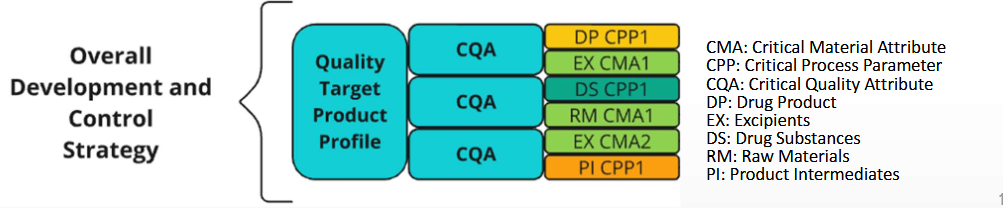
A few structural shifts stand out for anyone doing dossier authoring or CMC strategy work: - Module 2.3 becomes the regulatory narrative, not a summary. It's re-engineered as the central, high-level story of product quality, applying science- and risk-based principles rather than simply restating Module 3 content. Reviewers will increasingly assess the dossier through 2.3, with Module 3 functioning as the supporting evidence repository behind it. Six components now give that narrative its shape: - 2.3.1 General Information — essential product details such as names, dosage forms, strengths, administration routes, packaging, medical devices and maximum daily dose. - 2.3.2 Overall Development and Overall Control Strategy divided into the following subsections: - Quality Target Product Profile (QTPP) — The QTPP should be provided as per ICH Q8. - Overall Development Strategy — This section gives a brief overview of the development rationale, showing how CQAs guided the development of the drug substance, drug product, and process. It highlights key decisions, notes any use of enhanced approaches or prior knowledge, and provides enough context to explain major development choices without being exhaustive. - Overall Control Strategy (OCS) Representation— The Overall Control Strategy (OCS) provides an integrated view of how all controls—from CQAs to end‑to‑end manufacturing and packaging—work together to ensure product quality. A table or diagram should be included and may cross‑reference other Module 2.3 sections. The OCS covers only materials within the application and should incorporate relevant information from any referenced master files, such as specifications or manufacturing processes.
Schematic representation of the Control Strategy, adapted from ICH M4Q(R2): The Common Technical Document for the Registration of Pharmaceuticals for Human Use.
- 2.3.3 Core Quality Information (CQI) — The section outlines the information that applicants must provide to support a science‑ and risk‑based regulatory assessment, enabling marketing authorisation and effective lifecycle management. It should contain all product quality information subject to lifecycle management under regional post‑approval change requirements. Applicants are expected to maintain CQI throughout the product lifecycle to ensure it remains current. When Established Conditions (ECs) under ICH Q12 are approved, lifecycle management activities should follow the Product Lifecycle Management (PLCM) document described in section 2.3.5.2. Importantly, identifying ECs must not reduce the amount of information submitted in the marketing authorisation application. - 2.3.4 Development Summary & Justification (DSJ) — This section outlines how the drug substance, drug product, their components, and the manufacturing process were developed, providing science‑ and risk‑based justifications for the commercial process, control strategy, and—when applicable—Established Conditions under ICH Q12. Relevant prior knowledge may be included, and the content can be updated post‑approval, with cross‑references to Module 3 as needed. Section 2.3.4 also covers materials used in manufacture, which may be presented in dedicated subsections following the Description, Manufacture, Control, Storage (DMCS) structure, without duplicating information from 2.3.4.DS or 2.3.4.DP. - 2.3.5 Product Lifecycle Management (PLCM) — This section provides a summary and justification for post‑approval change submissions. It links directly to the PLCM document, which outlines the lifecycle management plan in accordance with ICH Q12. The PLCM includes Established Conditions (ECs), reporting categories for changes to ECs, PACMPs, and any post‑approval CMC commitments across submission types, including those involving or referencing master files. It covers both the initial marketing authorisation and subsequent post‑approval changes. - 2.3.6 Product Quality Benefit-Risk (PQBR)(optional) — This section outlines PQBR considerations that support the overall benefit–risk assessment in the Clinical Overview. PQBR is especially important for initial marketing applications under expedited pathways, where applicants should summarise how quality risks are mitigated and why anticipated patient‑centric benefits outweigh any residual uncertainties. Quality‑related risks may arise from product design, manufacturing, the control strategy, or limited product and process knowledge at the time of filing. PQBR should address how product quality is adequate for the intended therapeutic context and standards. The section may also discuss challenges in applying ICH‑recommended approaches, novel strategies, or situations where clinical context influences quality decisions. It can be updated throughout the product lifecycle to reflect changes in PQBR outcomes or residual risks.
The DMCS model brings real consistency across materials.
Every material type — drug substance, drug product, excipients, reference standards, medical devices, and more — is now organised the same way: Description, Manufacture, Control, Storage. For anyone who has spent years navigating inconsistent legacy dossier structures, this alone is a welcome piece of standardisation.
What regulators are signalling in 2026
Recent commentary from agencies suggests a pragmatic transition is coming: no mandatory retrofitting of legacy dossiers, transition periods being discussed in the 5–10 year range, mixed-format dossiers (some sections R1, some R2) permitted during the changeover, and a deliberate effort to align the M4Q(R2) timeline with eCTD 4.0 so companies aren't forced through two separate conversion exercises.
What this means for CMC and regulatory teams now
The practical implications go well beyond a template update: 1. Authoring changes fundamentally. DMCS-structured, modular authoring with tight cross-referencing between Module 2.3 and 3.2 will need to become second nature. 2. Systems need to catch up. IDMP alignment and structured data submissions mean regulatory information management systems will require investment, not just process tweaks. 3. Lifecycle thinking moves upstream. PLCM and Established Conditions won't be an afterthought at variation time — they'll need to be designed into the dossier from first authoring. 4. Legacy portfolios get breathing room — but "no mandatory conversion" doesn't mean "no impact." Anyone filing new variations or new applications will be working across old and new frameworks simultaneously. 5. Training is not optional. CMC, regulatory, and quality teams will need structured upskilling well ahead of 2027 — this is a bigger shift than most people currently appreciate. For biologics and ATMP/CGT programmes in particular — where control strategies are already complex and evolving rapidly through development — M4Q(R2)'s emphasis on a coherent Overall Control Strategy narrative and built-in lifecycle management is, if anything, a natural fit. The organisations that start mapping their existing Module 2.3/Module 3 content against the new structure now will have a real head start when adoption lands.
I'll be tracking M4Q(R2) developments closely over the coming months, particularly the transition guidance as it firms up. If you're starting to think through what this means for your dossier strategy, CMC roadmap, or team training plans, I'd be glad to compare notes. Dr. Lara Stevanato is the founder of Minerva Regulatory Consulting, specialising in CMC and regulatory strategy for ATMPs, cell and gene therapies, biologics, and small molecules across FDA, EMA, and MHRA jurisdictions. #RegulatoryAffairs #CMC #ICH #M4QR2 #CTD #ATMP #CellAndGeneTherapy #Biologics #PharmaRegulatory
References